Wireless technology has transformed how we connect, communicate, and control our world. From smart homes to industrial automation, the system wireless is no longer a luxury—it’s a necessity. Let’s dive into the revolutionary impact and hidden potentials of this invisible network.



What Is a System Wireless and How Does It Work?

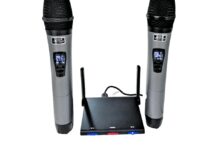
A system wireless refers to any network or device setup that transmits data without physical cables. Instead, it relies on radio waves, infrared signals, or other electromagnetic frequencies to enable communication between devices. This technology powers everything from Wi-Fi routers to Bluetooth earbuds and cellular networks.
Core Components of a Wireless System
Every system wireless is built on several foundational components that ensure seamless connectivity and data transfer. Understanding these elements helps in optimizing performance and troubleshooting issues.
- Transmitter: Sends data via radio waves or infrared signals.
- Receiver: Captures transmitted signals and converts them back into usable data.
- Antenna: Enhances signal strength and range for both transmission and reception.
- Network Interface Card (NIC): Enables devices like laptops or smartphones to connect to the wireless network.
- Access Point (AP): Acts as a central hub that connects wireless devices to a wired network.
“The beauty of a system wireless lies in its simplicity—no tangled wires, just seamless connectivity.” — TechRadar, 2023
Types of Wireless Communication Technologies
Different applications require different types of wireless technologies. Each has its own range, speed, and use case.
Wi-Fi (IEEE 802.11): Most common for home and office internet access.Offers high-speed connectivity over short distances.Learn more at IEEE Official Site.Bluetooth: Ideal for short-range device pairing (e.g., headphones, keyboards).Operates within 10 meters..
Zigbee: Used in home automation and IoT devices due to low power consumption and mesh networking.NFC (Near Field Communication): Enables contactless payments and quick data sharing between devices placed close together.Cellular Networks (4G/5G): Provide wide-area wireless connectivity for mobile phones and IoT devices.Evolution of the System Wireless: From Radio to 5G
The journey of wireless communication began over a century ago and has evolved dramatically.The system wireless has gone through multiple generations, each bringing faster speeds, lower latency, and broader applications..
Milestones in Wireless Technology
Key breakthroughs have shaped the modern system wireless landscape:
- 1895: Guglielmo Marconi demonstrated the first wireless telegraph using radio waves.
- 1947: Bell Labs proposed the cellular concept, laying the groundwork for mobile networks.
- 1997: IEEE released the 802.11 standard—the birth of Wi-Fi.
- 2000s: 3G networks enabled mobile internet browsing and video calling.
- 2010s: 4G LTE brought high-speed mobile broadband, supporting streaming and cloud services.
- 2020s: 5G rollout promises ultra-low latency, massive device connectivity, and support for autonomous vehicles and smart cities.
Generational Shift: 1G to 6G (Future Outlook)
Each generation of wireless technology has introduced transformative capabilities:
1G: Analog voice calls with poor security and quality.2G: Digital voice and SMS; introduced encryption.3G: Mobile internet access, basic video calls.4G: High-speed data, HD streaming, VoIP services.5G: Millimeter wave spectrum, speeds up to 10 Gbps, latency under 1ms.Critical for real-time applications like remote surgery and industrial automation.
.6G (Expected by 2030): Terahertz frequencies, AI-integrated networks, holographic communications, and pervasive sensing.Research is ongoing at institutions like Nokia Bell Labs.”5G isn’t just faster 4G—it’s a platform for innovation.” — Ericsson Mobility Report, 2023
Types of System Wireless Networks
Not all wireless systems are the same.Depending on the coverage area, data rate, and application, different types of wireless networks exist.Each serves specific needs in personal, enterprise, and industrial environments..
Wireless Personal Area Network (WPAN)
WPANs connect devices within a very short range, typically up to 10 meters. They are ideal for personal device synchronization.
- Technologies: Bluetooth, Zigbee, NFC, Z-Wave.
- Use Cases: Connecting wireless mice, smartwatches, fitness trackers, and home sensors.
- Advantages: Low power consumption, easy setup, cost-effective.
Wireless Local Area Network (WLAN)
WLANs cover a larger area than WPANs, usually within a building or campus. The most common example is Wi-Fi.
- Standards: IEEE 802.11a/b/g/n/ac/ax (Wi-Fi 6).
- Range: Up to 100 meters indoors, more with external antennas.
- Applications: Home internet, office networks, public hotspots.
- Security Protocols: WEP, WPA, WPA2, WPA3—WPA3 being the most secure.
“Wi-Fi 6 increases network efficiency by 4x compared to Wi-Fi 5.” — Cisco Systems, 2022
Wireless Metropolitan Area Network (WMAN)
WMANs provide connectivity across cities or large geographic areas. They bridge the gap between local and wide-area networks.
- Technology: WiMAX (IEEE 802.16) is a key standard.
- Range: Up to 50 km under ideal conditions.
- Use Cases: Rural broadband, last-mile connectivity, municipal networks.
- Advantages: High bandwidth over long distances without fiber deployment.
Wireless Wide Area Network (WWAN)
WWANs rely on cellular networks to provide internet access over vast regions.
- Technologies: 4G LTE, 5G NR, LTE-M, NB-IoT.
- Providers: Verizon, AT&T, T-Mobile, Vodafone, etc.
- Applications: Mobile phones, IoT devices, fleet management, remote monitoring.
- Advantages: Ubiquitous coverage, mobility support, scalable infrastructure.
Key Benefits of a System Wireless
The adoption of a system wireless offers numerous advantages over traditional wired setups. These benefits span convenience, scalability, cost, and innovation.
Flexibility and Mobility
One of the greatest strengths of a system wireless is the freedom it provides. Users can move around without being tethered to a physical port.
- Employees can work from anywhere in the office.
- Students can access learning materials in libraries or courtyards.
- Healthcare professionals can monitor patients wirelessly using wearable devices.
Cost-Effective Deployment
Installing wired networks requires extensive cabling, conduits, and labor—especially in large or historic buildings.
- Wireless systems reduce installation time and material costs.
- No need to drill walls or disrupt operations during setup.
- Easier to reconfigure office layouts without rewiring.
Scalability and Easy Expansion
Adding new devices to a wired network often means running new cables. In contrast, a system wireless allows for effortless expansion.
- New employees can connect laptops or phones instantly.
- IoT deployments (e.g., smart lighting, HVAC sensors) scale rapidly.
- Cloud-managed wireless networks allow centralized control of thousands of access points.
“Wireless networks are 60% cheaper to scale than wired alternatives in dynamic environments.” — Gartner, 2023
Common Applications of System Wireless
The system wireless is embedded in nearly every aspect of modern life. From consumer electronics to critical infrastructure, its applications are vast and growing.
Smart Homes and IoT Devices
Modern homes are increasingly reliant on wireless connectivity for automation and convenience.
- Smart thermostats (e.g., Nest) adjust temperatures based on occupancy.
- Wireless security cameras stream footage to smartphones.
- Smart speakers (e.g., Amazon Echo) use Wi-Fi and Bluetooth to respond to voice commands.
- Lighting systems (e.g., Philips Hue) are controlled via apps over a system wireless.
Enterprise and Office Environments
Businesses leverage wireless systems for productivity, collaboration, and security.
- Employees connect to corporate networks via secure Wi-Fi.
- Wireless printers and projectors enhance meeting efficiency.
- BYOD (Bring Your Own Device) policies are supported through secure authentication.
- Real-time collaboration tools (e.g., Zoom, Microsoft Teams) depend on stable wireless connections.
Healthcare and Telemedicine
In healthcare, a reliable system wireless can be life-saving.
- Wireless patient monitors transmit vital signs to nurses’ stations.
- Remote diagnostics allow doctors to consult patients via video calls.
- Implantable devices (e.g., pacemakers) send data to physicians wirelessly.
- Hospitals use RFID tags to track equipment and staff movement.
Industrial Automation and Smart Factories
Industry 4.0 relies heavily on wireless systems for monitoring and control.
- Sensors on production lines send real-time data to central systems.
- Wireless robotics communicate with each other in automated warehouses.
- Predictive maintenance uses wireless vibration and temperature sensors.
- 5G-enabled private networks support ultra-reliable low-latency communication (URLLC).
Challenges and Limitations of System Wireless
Despite its many benefits, a system wireless is not without challenges. Understanding these limitations is crucial for effective implementation.
Security Vulnerabilities
Wireless signals can be intercepted, making them more vulnerable than wired connections.
- Risks include eavesdropping, man-in-the-middle attacks, and rogue access points.
- Weak passwords or outdated encryption (e.g., WEP) increase exposure.
- Solutions: Use WPA3, enable MAC address filtering, implement firewalls, and use Virtual Private Networks (VPNs).
Interference and Signal Congestion
Radio frequency interference can degrade wireless performance.
- Common sources: Microwaves, cordless phones, neighboring Wi-Fi networks.
- Dense urban areas suffer from channel overlap and congestion.
- Mitigation: Use dual-band routers (2.4 GHz and 5 GHz), enable beamforming, and conduct site surveys.
Range and Coverage Issues
Physical obstacles like walls, floors, and metal structures can block or weaken signals.
- Large buildings may require multiple access points or mesh networks.
- Outdoor deployments need directional antennas or repeaters.
- Solutions: Wi-Fi extenders, mesh systems (e.g., Google Nest Wi-Fi), and signal boosters.
“Up to 30% of wireless issues are due to poor placement of access points.” — Network World, 2023
Future Trends in System Wireless Technology
The future of system wireless is bright, with emerging technologies set to redefine connectivity, speed, and intelligence.
Wi-Fi 7 and Beyond
Wi-Fi 7 (IEEE 802.11be) is the next evolution, promising multi-gigabit speeds and ultra-low latency.
- Features: 320 MHz channels, 4096-QAM modulation, multi-link operation (MLO).
- Expected Speeds: Up to 40 Gbps under ideal conditions.
- Applications: 8K streaming, VR/AR, real-time gaming, and industrial automation.
- Standard expected to be finalized in 2024; early devices already in development by companies like Qualcomm.
Integration of AI and Machine Learning
AI is being used to optimize wireless networks dynamically.
- AI-driven network management predicts traffic patterns and adjusts bandwidth allocation.
- Self-healing networks detect and resolve issues without human intervention.
- Machine learning improves spectrum efficiency and reduces interference.
- Examples: Cisco DNA Center, Juniper Mist AI.
Wireless Power Transfer
The dream of truly wireless devices—without charging cables—is becoming a reality.
- Technologies: Resonant inductive coupling, RF energy harvesting.
- Applications: Charging smartphones, wearables, and IoT sensors wirelessly.
- Companies like Energous and Ossia are pioneering over-the-air charging.
- Future vision: Rooms with ambient wireless power, eliminating batteries.
6G and the Era of Sensory Networks
While 5G focuses on connectivity, 6G aims to create an intelligent, sensing environment.
- Expected Launch: Around 2030.
- Key Features: Terahertz frequencies (100 GHz – 3 THz), sub-millisecond latency, integrated AI.
- Applications: Holographic telepresence, brain-computer interfaces, real-time environmental sensing.
- Research Hubs: University of Oulu (Finland), Samsung Advanced Institute of Technology.
“6G will not only connect people and machines—it will sense the world.” — IEEE Future Networks Initiative
How to Choose the Right System Wireless for Your Needs
Selecting the appropriate wireless system depends on your specific requirements, environment, and budget.
Assess Your Coverage and Capacity Needs
Before deploying a system wireless, evaluate the physical space and number of users.
- Small homes: A single Wi-Fi router may suffice.
- Large offices: Require multiple access points and a centralized controller.
- Outdoor areas: Need weatherproof access points and directional antennas.
- High-density venues (e.g., stadiums): Demand enterprise-grade solutions with load balancing.
Consider Security and Management Features
Security should never be an afterthought in wireless deployment.
- Look for WPA3 encryption and support for RADIUS authentication.
- Choose systems with built-in firewalls and intrusion detection/prevention.
- Cloud-managed platforms (e.g., Meraki, Aruba Central) offer remote monitoring and updates.
- Ensure firmware updates are regularly provided by the manufacturer.
Evaluate Scalability and Future-Proofing
Invest in technology that can grow with your needs.
- Opt for Wi-Fi 6 or Wi-Fi 6E routers to support future devices.
- Ensure compatibility with IoT protocols like Zigbee or Thread.
- Consider private 5G networks for industrial or enterprise use cases.
- Choose modular systems that allow easy expansion.
What is a system wireless?
A system wireless refers to any network or device setup that transmits data without physical cables, using radio waves or other electromagnetic signals. It includes technologies like Wi-Fi, Bluetooth, 4G/5G, and Zigbee, enabling communication between devices over short or long distances.
What are the main types of wireless networks?
The main types are Wireless Personal Area Network (WPAN), Wireless Local Area Network (WLAN), Wireless Metropolitan Area Network (WMAN), and Wireless Wide Area Network (WWAN). Each serves different coverage areas and applications, from personal devices to city-wide connectivity.
Is a system wireless secure?
While convenient, wireless systems can be vulnerable to attacks if not properly secured. Using strong encryption (like WPA3), changing default passwords, enabling firewalls, and updating firmware regularly can significantly enhance security.
What is the difference between Wi-Fi 6 and 5G?
Wi-Fi 6 is a local wireless standard for homes and offices, offering high speed and low latency within a limited area. 5G is a cellular technology providing wide-area mobile connectivity with ultra-low latency and massive device support, ideal for mobile and IoT applications.
What’s coming after 5G?
6G is expected around 2030, using terahertz frequencies and AI integration to enable holographic communication, brain-computer interfaces, and pervasive environmental sensing. Research is already underway globally.
The system wireless has revolutionized how we live, work, and interact. From the early days of radio to the dawn of 6G, wireless technology continues to break barriers and unlock new possibilities. Whether it’s connecting smart homes, powering industries, or enabling global communication, the system wireless is the invisible backbone of the digital age. As innovation accelerates, staying informed and choosing the right solutions will be key to harnessing its full potential. The future is not just wireless—it’s intelligent, seamless, and limitless.
Further Reading: